Security work calls for reliability, attention and communication skills. Reception roles may require English; event work can involve long periods standing and walking around the venue. Requirements vary by role.
Who are we really looking for?
We are looking for reliable people who can handle responsibility, shift work and communication with the public. We most often fill the following positions:
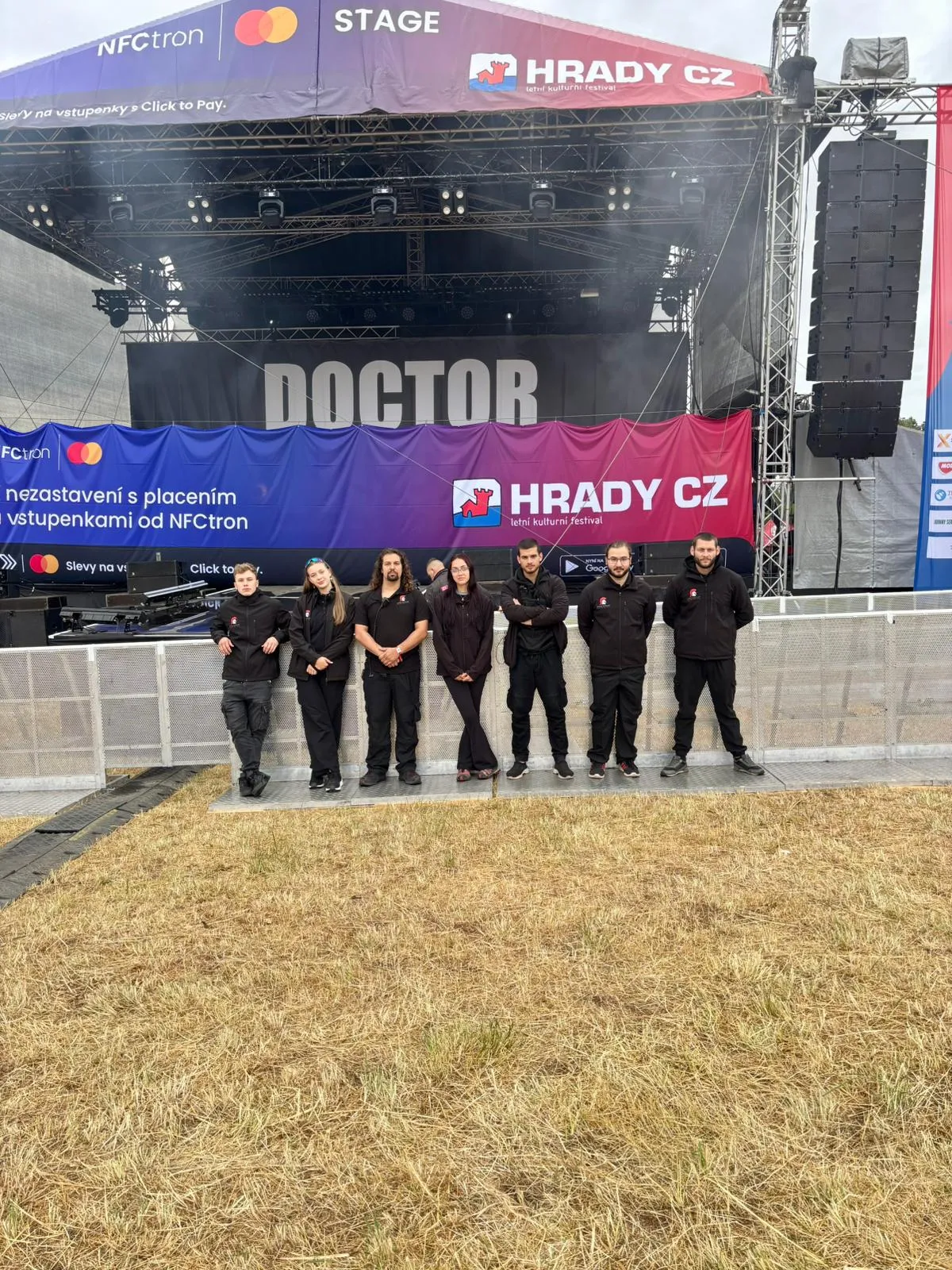
- Event security: Work on concerts and festivals. It is a movement-intensive service with contact with visitors, where calmness and team communication are important.
- Site security: Logistics, construction and industry. This work is about diligence. You need to be comfortable with technology (EPS, intrusion alarms) and be comfortable with night patrols.
- Receptionist: The company's first contact with a visitor. We are looking for people with a pleasant demeanor who can communicate in English and can handle administration.
What do we offer (and what not)?
Work in security is demanding. It includes long shifts, working at night, weekends and the need to stay focused even in moments when nothing seems to be happening.
We will provide the necessary equipment, we will help you with the professional qualification Strazny 68-008-E, and for reliable people, we gradually open the possibility of promotion to shift or facility manager.
What is good to know before starting
Security is not a job for everyone. It requires punctuality, sound judgment, the ability to listen to instructions and a willingness to communicate even with people who are not pleasant. Experience can be gained, but reliability and respect for the rules must be brought by the applicant from the beginning.
Brno and surrounding area
We primarily operate in Brno and South Moravia, but we also travel to other regions for selected events. Transportation and boarding are handled according to the specific schedule of the service.
If you have a clean criminal record and want to work in security, browse our current vacancies in Bravion. We are continuously hiring event crew, security personnel for operations and event coordinators. For a better idea of field work, read the article about how it works festival security.
How learning takes place
Training varies by service type. At the reception, the visitor arrangements, communication, work with systems and orientation in the building are dealt with. It is important to go around the building, hand over the shift, respond to the alarm and rules for entrances. For event security, more work is done with briefings, division of sections, communication in the group and movement between visitors.
A new person should not only be given a time and a starting place. He needs to know who he reports to, what equipment he has, where the risk areas are, how events are recorded, and when to report the situation to the shift leader. The clearer the first shift, the less room there is for unnecessary mistakes.
What decides when choosing a candidate
Experience is an advantage, but not the only criterion. For many positions, reliability, punctuality, the ability to follow instructions and a good demeanor are more important. In security, you often find yourself in a situation where you have to be calm, even if the other party is not.
- Reliability: the shift must be occupied on time and according to the schedule.
- Communication: the worker must be able to briefly describe the problem and pass the information on.
- Respect for the rules: improvisation must not replace the visiting rules or instructions of the leader.
- Performing: security officer represents both the client and the agency.
- Willingness to learn: each site and event needs its own security arrangements.
When to call, even if you're not sure
Applicants often wait until they have all the experience beforehand. This is not necessary for some positions. It is more important to write truthfully when you can start, what shifts you can handle, whether you have a clean record, how you are with transport and whether you already have experience with people, customer service or night work.
Be honest about the availability you can maintain. A reliable shift schedule matters more than bold interview promises. Knowing when you can work helps us find a suitable role and avoid unnecessary last-minute changes.
Discuss your availability and limitations openly during recruitment. Some people suit regular site work, others event shifts or reception duties. A suitable placement helps the worker, client and team by reducing missed shifts and misunderstandings. A clear agreement matters more than starting quickly at any cost.