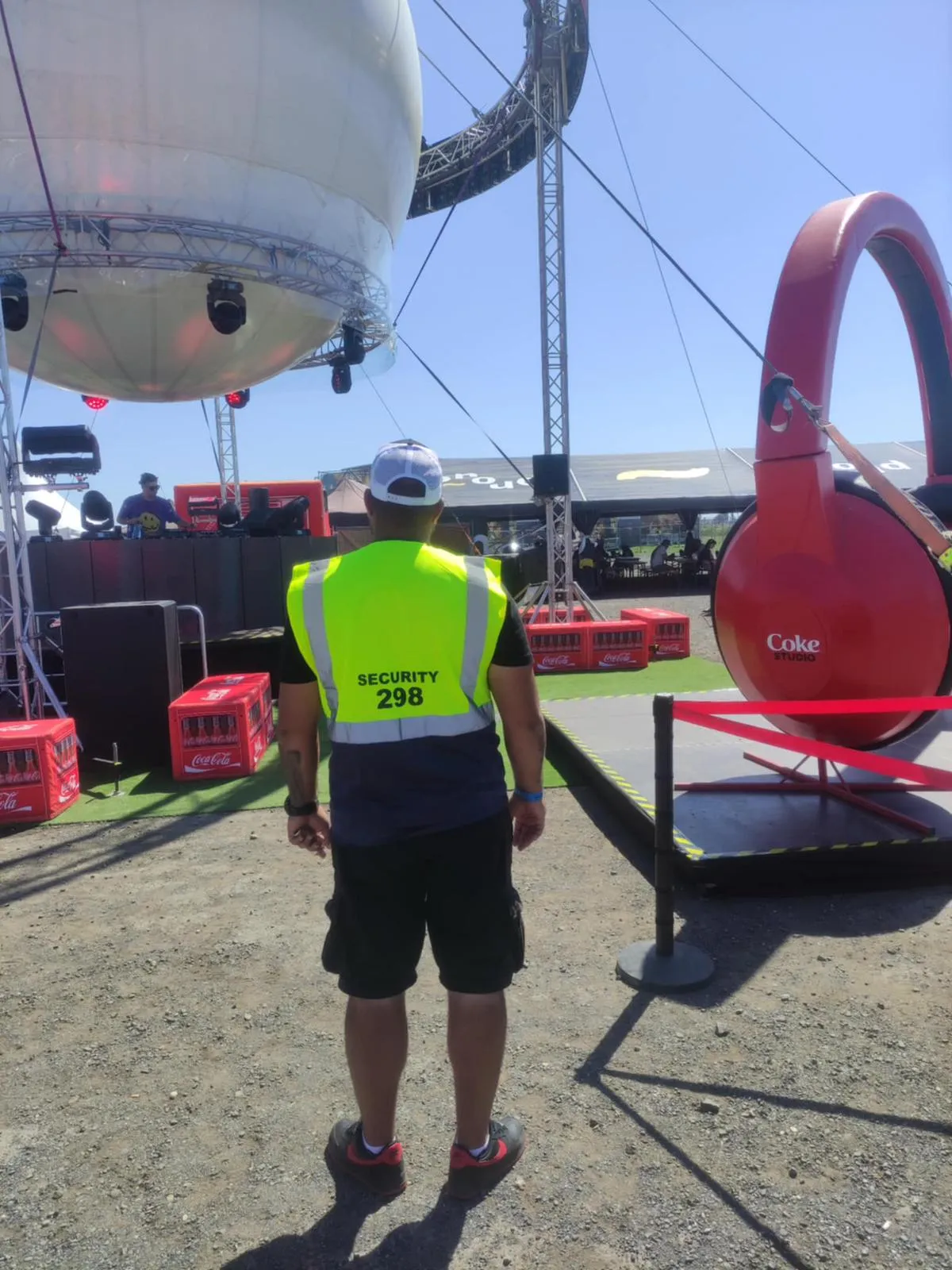
From the point of view of security, the music festival is a temporary operation with its own entrances, facilities, visitor routes, weather and emergency communication. Most problems don't come out of nowhere. It often follows unclearly set operation.
Checklist of the organizer before the opening of the area
Festival security doesn't start the moment the first visitor arrives. It starts with the division of the area and the decision of who moves where. If the operation is not well designed, security will only extinguish the consequences.
- Capacity and flow of people: How many people can safely use entrances, areas in front of the stage, food and drink areas, and escape routes.
- Entrances and accreditation: Separate corridors for visitors, VIP, production, performers and deliveries.
- Non-public and technical facilities: Clearly defined non-public zones, access control and responsibility for issued accreditations.
- Evacuation and weather plan: Who gives the instruction to interrupt the program, who opens the corridors and who communicates with the visitors.
- Control communication: One point of contact for the organizer, one for security and a clear escalation tree for incidents.
Critical point: entry gate
Entry is the first impression and the first operational test of the entire event. When there is a plug at the gate, nervousness quickly grows, control deteriorates and the crowd begins to press on the staff.
- Entry screening: Corridors and barriers must slow down and divide the crowd before the actual inspection.
- Prohibited items check: Glass, pyrotechnics, weapons or objects that may endanger other visitors.
- Check-in speed: The security check must be consistent, but must not unnecessarily create queues that turn into pressure to enter.
- Accreditation: Separate entrances for VIPs, performers, staff and suppliers are a basic requirement, not an optional extra.
Non-public zones and technical facilities
While visitors watch the programme, work continues backstage. Dressing rooms, equipment and production facilities need different access arrangements from public areas. Staff need to know who may enter each space and who can approve an exception.
The bigger the event, the less room there should be for improvisation in non-public zones. If accreditation does not apply consistently, the boundaries between public and non-public spaces will quickly begin to dissolve. The division of zones should be approved in advance and clearly communicated to the responsible persons.
Reserved spaces, corridors and transitions between modes
Problems can arise away from the stage too: at entrances to restricted areas, corridors to partner zones, narrow points near toilets, bars and service passages. These are places where visitor expectations meet the venue’s operational limits.
If the reserved space is part of the festival, but is not clearly separated and served by its own mode, security solves the same conflicts over and over again. Legible signage, separate staff and clearly defined boundaries of responsibility help.
Communication is key
For a larger event, you can't rely on people always simply calling each other. Communication between production, security, health workers and organizers must be functional even in noise, stress and with a busy mobile network.
Weather and evacuation mode
The plan may be well prepared, but improvisation does not work against wind, storm or technical failure. Part of the preparation must include weather monitoring and a scenario of who decides to interrupt the program and how the instruction is reflected in the movement of people in the area.
Evacuation planning is part of crowd management. The organiser and security team must keep routes and exits clear and give visitors understandable instructions.
Cooperation with IZS is not a formality
For larger events, it must be clear in advance who communicates with the police, fire brigade and ambulance. The security team is not supposed to replace the IZS, but must be linked to it. If in a crisis situation it is not clear who is passing on the information and who is leading the area until the components arrive, precious minutes are lost.
We discuss it in more detail in the article how event security works with the police and paramedics.
Are you planning a festival or a larger corporate event? Security is not an item that is addressed two days before opening. It is an operational discipline that begins with the design of the area and ends with the last safe departure of visitors. For a more in-depth look at the technical aspects of the crowd, read on as well crowd management and prevention of crowd panic and broader methodology in the article security of public events.