The term security agency sounds simple, but in practice companies deal with very different situations under it. Someone needs a guard at the gatehouse, other supervision of the logistics area, a security team at a concert, an organizing service, building protection or a discreet escort of a specific person. Therefore, quality service does not start with the question of how much one person will cost per hour. It starts with understanding what is to be protected, from what and who is responsible for decisions on the ground.
What does security agency mean today
A security agency is a supplier that helps protect a client's people, property, business continuity and reputation. In a typical corporate environment, this may mean facility security, entrance control, concierge, reception, patrols, camera surveillance or incident response. For events, it is more about entrances, sectors, backstage, VIP zones, communication with the organizer and calm management of the movement of visitors.
Security services need to fit the setting. Overnight warehouse supervision differs from event security at a multi-day festival and from reception service in the administration building. The same person, the same equipment and the same procedure may not work everywhere.
When it makes sense to request a security service
Companies often think about security only after a problem: theft, conflict, break-in, loss of material or a poorly managed event. But it makes sense to solve the service earlier, especially if there is a repeated risk in operation, a higher value of property, movement of the public or responsibility for a larger number of people.
- Buildings and sites: warehouses, production, offices, logistics, construction, retail or places with regular movement of suppliers and visitors.
- Events and public programs: concerts, sports matches, corporate events, festivals, city celebrations or programmes with several entrances and zones.
- Sensitive situations: VIP escorts, restricted facilities, sensitive meetings, overnight operations, conflict-prone settings or increased media attention.
- Change of operation: opening a new branch, moving a warehouse, renovations, introducing cameras, new entry modes or an increase in losses.
First the regime, then the number of people
A common enquiry says: “We need one worker for the night.” Sometimes that is right, but sometimes it is only an estimate without a link to the actual risk. An experienced agency therefore asks about entrances, vehicle access, patrol points, peak periods, asset value, people movement, previous incidents and the required information handover.
The number of people is the result. First of all, it must be clear whether the service is supposed to control entry, respond to an alarm, record visits, accompany suppliers, guard the perimeter, work with cameras, manage the queue or just act preventively on site. Without this distinction, the offer may be cheap but weak in practice.
Types of services and their differences
On paper, everything can look like security. There are big differences in operation between individual services. The overview below helps you determine which type of service is closest to your specification.
| Situation | What is typically solved | Where to continue |
|---|---|---|
| Building or site | pedestrian and vehicle entrances, patrols, key management, perimeter checks and overnight operations | site security |
| Events | entrance control, sectors, backstage, VIP, crowd management, communication with the organizer | event security |
| Concierge or reception | records of visits, communication, information transfer, access control, basic administration | concierge and reception services |
| Logistics | trucks, ramps, suppliers, vehicle registration, movement control in the area, night surveillance | logistics security |
| Personal protection | escort, route plan, discreet supervision, time management, communication and conflict prevention | personal protection |
What to prepare before the request
The more precise the input you send, the less the offer will be based on an estimate. It is not necessary to have it ready security plan. It is enough to describe the operation so that the agency understands where the risk arises and what you expect from the service.
- Place and type of operation: address, type of site or event, number of pedestrian and vehicle entrances, zones and risk areas.
- Time range: one-off service, regular shifts, night mode, weekends, holidays or seasonal peaks.
- Tasks of workers: patrols, reception, entrances, cameras, records, escort, vehicle inspection or response to an alarm.
- Risks: material losses, public movement, conflicts, alcohol, expensive equipment, sensitive areas or repeated incidents.
- Responsibility: who is the contact person, to whom the incident is reported, who makes decisions outside working hours and what the report should look like.
How to recognize a well managed service
Management shows the quality of an agency most clearly. The worker on site is the visible part of the service, but recruitment, selection, training, shift planning, performance checks, cover and a responsible person who knows the assignment must stand behind them.
A well-run service has clear instructions for both routine situations and incidents. The worker knows what to check, what to write down, who to call and when to pass the situation on. At the same time, the client knows who his contact is, when he will receive a report and how a shift failure is resolved. It is these things that determine whether the service works even when a problem occurs.
Reporting is not extra administration
Without records, security is difficult to evaluate. Reporting does not have to be complex, but it must be appropriate for the risk. For a smaller facility, a regular record of shifts and emergencies may be sufficient. For a larger area, an electronic patrol system, visitor records, photo documentation of incidents or a summary for the operations manager makes sense.
The goal is not to create papers for papers. The goal is for the client to know what actually happened at the facility or event, when it happened, and how the team responded. This is also important for the insurance company, the police, internal evaluation or adjustment of the regime after a repeated incident.
Technology helps but does not replace responsibility
Cameras, access systems, alarms and waypoints can greatly improve service. By themselves, however, they do not solve the question of who will react to the signal, who will evaluate the situation, who will stop unauthorized entry and who will pass the information on to the responsible person. Therefore, it often makes sense to combine physical presence and technology.
If you are considering whether to use human, camera surveillance or a combination, the article follows physical security, cameras or a guard patrol monitoring system. In practice, however, the technology should support a clear regime, not cover up the fact that no one knows who should handle the incident.
The price of a security agency: why offers differ
For security services, the hourly rate is often compared. This is understandable, but it is not enough by itself. The price includes the number of people, length of shifts, night and weekend mode, risk of operation, required qualifications, equipment, service management, substitutability, insurance and reporting.
A suspiciously low price doesn't automatically mean bad service, but it always deserves an explanation. Ask what is included, how staff absence is handled, who runs the service and how performance will be monitored. You can find a more detailed breakdown in the article how much security costs and indicative rates in the price list.
Legal framework and role boundaries
Security of property and persons is a licensed activity in the Czech Republic. But this does not mean that a private security service worker has the same powers as the police. The role of the security agency is preventive, organizational and operational. It is to protect the entrusted space, comply with contractual procedures, communicate with people, record events and, if necessary, summon responsible persons or units of the IZS.
For more sensitive operations, it therefore makes sense to deal not only with the number of employees, but also with visiting rules, internal instructions, camera recordings, GDPR, working with keys, forwarding incidents and limits of intervention. A follow-up text is suitable for this guard in the Czech Republic: qualifications, roles and legal boundaries.
Security audit as a good start
If you are not sure which mode is suitable for the facility or site, it makes sense to start with an audit. Security audit reviews entrances, the perimeter, patrol routes, equipment, weaknesses and procedures. The result should define the roles of staff and technology and explain how reporting will work.
An audit is particularly useful where repeated losses, a new facility, change of operation, dissatisfaction with current service or investment in cameras and access systems are being addressed. We describe a more detailed procedure in the article site security audit: what it reveals and how it creates security arrangements.
How a good provider asks about your brief
The first consultation should not be just collecting the price per hour. The agency should want to understand what is being protected, how the site works, and what problem the service is trying to solve. If he asks for details, it's not a delay. It is from these details that a proposal is created that can be defended.
- What is the main goal of the service: loss prevention, access control, smooth running of the event, protection of the person or operations supervision?
- When is the risk highest: at night, when receiving goods, when visitors are leaving, during peak hours or outside working hours?
- Who decides on the spot and who should be informed during an incident?
- What technologies already exist and who operates them?
- How do you know if a service is working better than the current state after a month?
What a security provider should not promise
Security service reduces risk, sets control and accelerates response. However, it should not promise absolute protection against every incident. A fair supplier can tell what is realistically covered, where the risk remains and what is outside the scope of the service.
Similarly, he should not confuse marketing with process. Phrases about professionalism are common, but more important is a concrete answer: who will come on board, who will train them, how the service will be controlled, who will handle the outage, and what the client will get after the shift or event is over.
How we approach it at Bravion
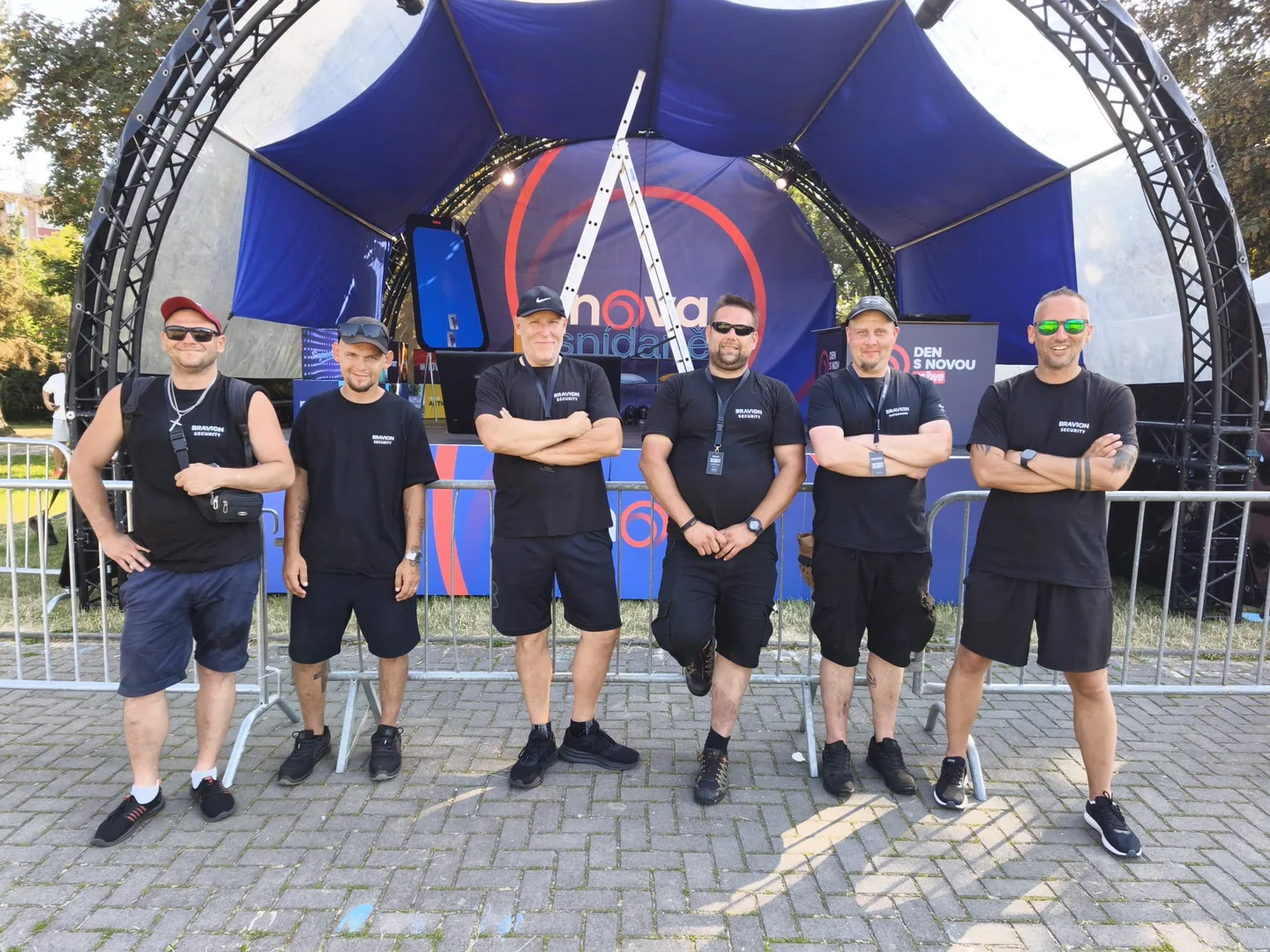
Bravion is security agency from Brno, but we do not handle individual jobs universally. In the case of buildings and premises, we are interested in the mode of entry, the movement of people, the rhythm of operation and responsibilities. For events, we deal with zones, entrances, backstage, attendance, time schedule and communication with the organizer. For personal protection, discretion, route, time and the real reason for the escort are important.
The goal is to design a service that makes sense operationally and cost-effectively. Sometimes the answer is physical security, sometimes reception mode, other times a combination of people and technology. And sometimes it is necessary to complete the specification first, because without it the offer would be just an estimate.
Summary: good service is concrete
If you're looking for a security agency, don't just start with price. Start with what is to be protected, how the site works and what a successful outcome should look like. A good supplier will help you refine the specification, point out weak points and explain how they will manage the service.
The article follows for a quick comparison five warning signs when choosing a security agency. If you are mainly dealing with Brno and its surroundings, you can find a practical checklist in the text how to choose a security agency in Brno.