
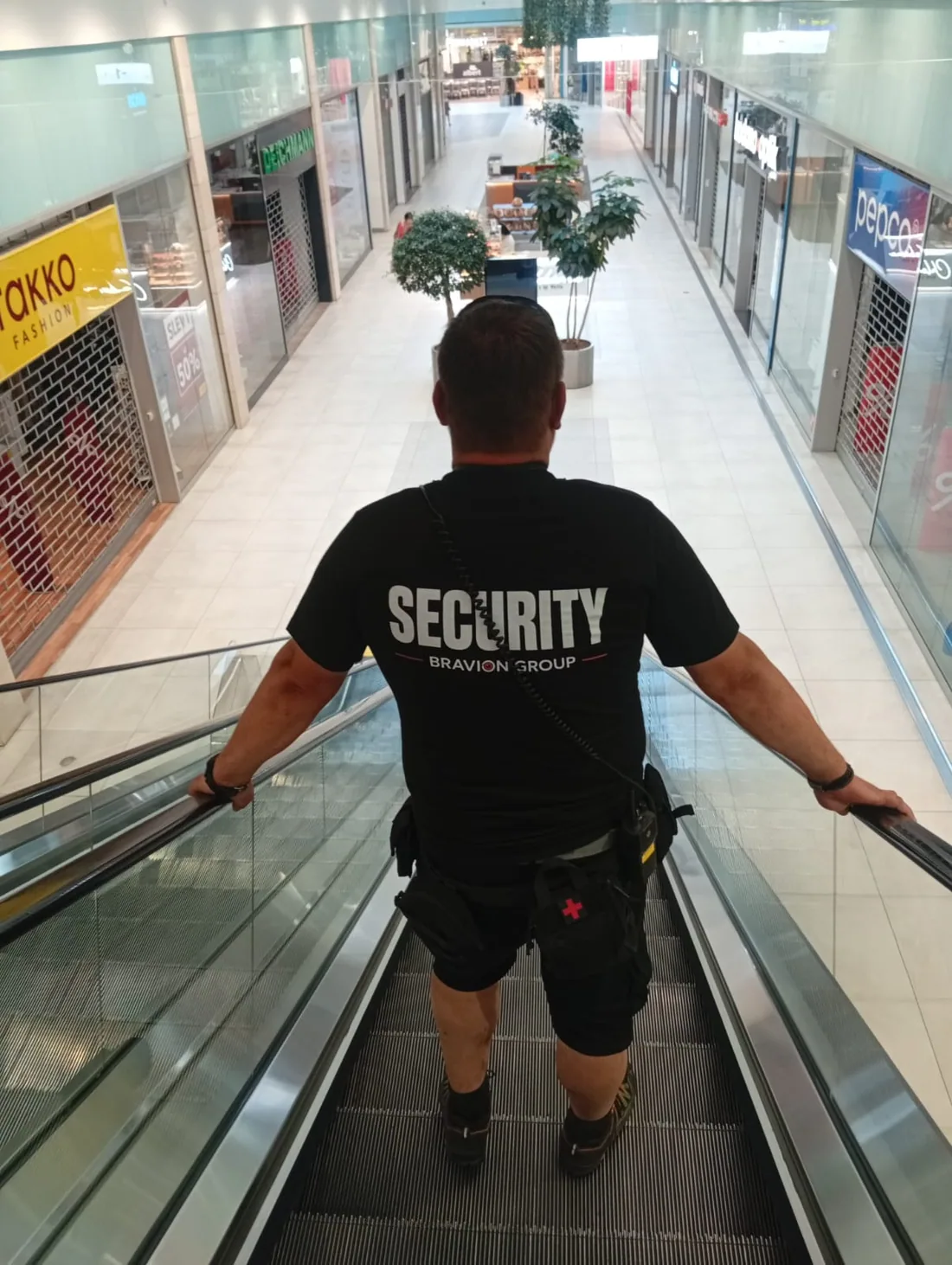
Retail losses can arise from theft or errors in receiving, storing and selling goods. Addressing them requires reviewing staff and guard duties, camera use and incident records.
For loss prevention, it is important to think operationally: where weak points arise, what signals the staff should perceive and when the store should already engage store security, audit or the Police of the Czech Republic. A good regime protects goods and personnel and at the same time does not unnecessarily disrupt normal sales.
1. Organized activity does not always look conspicuous
Organized theft does not have to start dramatically. It often acts as the normal movement of customers around the store. The risk increases when the same patterns are repeated: group movement, staff distractions, rapid transfers between departments, unusual interest in certain goods or returns of the same people within a short period of time.
Staff should not judge people based on appearance. Behavior, context and repetition are more important. That is why it makes sense to train employees in what and to whom to report, so that a usable picture emerges from individual small observations.
2. Technology is one layer of protection
Electronic protection of goods, camera system and entrance gates can help significantly. They do not guarantee lower losses on their own. Staff must be able to assess footage, respond on site and pass on information according to agreed procedures.
New equipment cannot solve a process problem on its own. If risk areas are not monitored, staff do not know whom to report an incident to, or warehouse procedures are unclear, the technology may achieve little despite its cost.
3. Signals to be perceived by personnel
It is more practical for staff to work with general signals: unusual behavior with risky goods, attempts to distract attention, repeated covering of hand movements, unclear movement between departments, group divided into roles or resistance to normal customer communication.
These signals do not in themselves indicate guilt. They mean a reason for greater attention, actively addressing the customer, passing on information to the shift leader or engaging security according to internal rules.
| Area | What to monitor | Reasonable response |
|---|---|---|
| Shop floor | Repetitive movements of risky goods, distraction, group behavior. | Active customer service and passing on information to the shift manager. |
| Checkout | Mismatch between goods, receipt and customer behavior. | Calm verification, supervisor involvement and procedure according to store rules. |
| Warehouse and facilities | Unclear movement of goods, lack of responsibility, weak records. | Process audit, access restrictions and regular inventory. |
| Incident | Repeated pattern, higher value of goods, risk of conflict. | Handing over security, recording the event and, depending on the situation, the Police of the Czech Republic. |
4. Human factor
Staff often do not want to address the situation for fear of conflict or wrongful accusation. That's understandable. That is why the store should have a clear procedure that separates normal customer communication from a security incident.
Good prevention does not start with customer suspicion, but with professional service. Reaching out, offering help and the visible presence of staff reduce anonymity while not harming honest customers.
5. The role of security staff
Security links store operations, monitoring and incident response. Uniformed staff can deter theft at entrances and high-risk areas. A plain-clothes store detective can observe behaviour discreetly on the shop floor. Both must act within the law and the store’s procedures.
Security staff do not have police powers. They should not arbitrarily search bags or increase tension. Situations beyond their role should be referred to the police or the responsible person.
6. Records and Evaluation
An individual incident is important, but repetition is even more important. If similar situations happen on the same day, in the same department or with the same type of goods, it is no longer just a coincidence. The store should track time, place, type of merchandise, staff response, and outcome.
The record should be factual and without assumptions. It helps to set up shifts, the distribution of goods, the work of cameras, communication with the police and staff training.
7. Prevention in practice
- Staff training: what to watch, who to report and how to communicate without accusations.
- Risk goods: thoughtful placement, supervision and regular inspection.
- Warehouse and facilities: clear responsibility, records of movement of goods and access restrictions.
- Camera system: realistic coverage of risk locations and clear rules for records.
- Cooperation with the police: prepared documents, records and contact person.
- Audit: regular verification that processes correspond to actual operations.
Conclusion
Organized retail theft cannot be solved with one measure. A combination of uncluttered operation, trained staff, appropriately set technology, security and regular evaluation works. If you suspect that losses are repeating a certain pattern, start security audit and a factual description of where the goods disappear.