
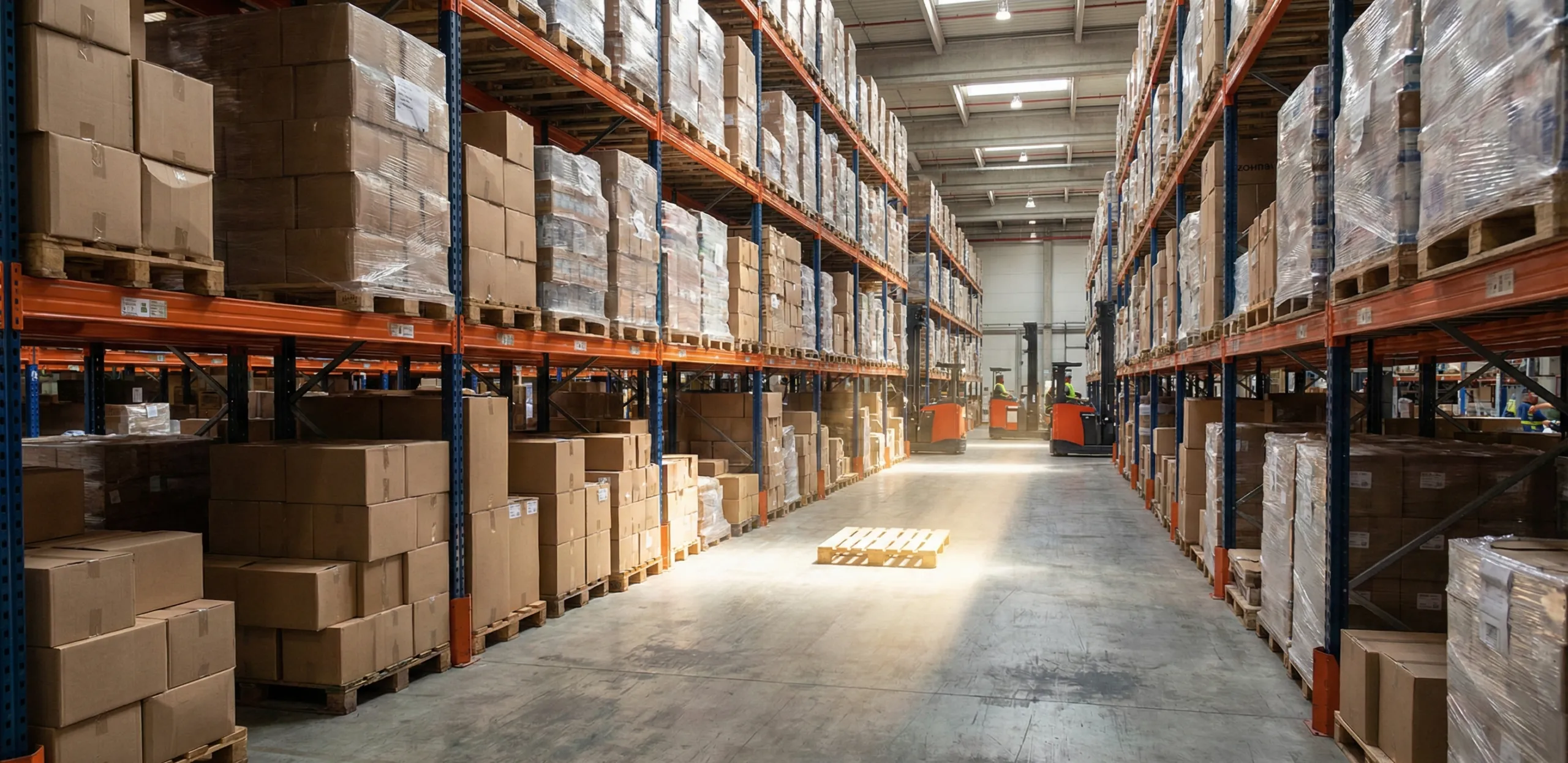
Logistics parks and warehouses depend on the rapid movement of goods, people and vehicles. That pace can expose gaps in records, access checks and loading-bay supervision. Loss prevention must therefore cover the whole process, beyond the fence and cameras.
The most common risks in logistics areas
The risk is spread throughout the operation. Employees, drivers, service companies and visitors alternate during the day. At night, there are fewer people and more pressure on the routine. If the records and checks are done only formally, the losses look like normal differences in operations for a long time.
- Loading bays and dispatch: discrepancy between physical movement of goods and system records.
- Entrances and exits: weak verification of authorization of vehicles, visits or suppliers.
- Storage zones: unclear responsibilities, movement of people outside their role and weak access control.
- Night operation: lower occupancy, less supervision and more reliance on shift rules.
- Externs: service, maintenance, drivers and entities that are not on the premises every day.
Inspection of the ramp and movement of goods
The ramp is where storage, transport, security and system records meet. If everyone sees only their part, the big picture is lost. Prevention is based on the fact that it is clear who confirms the loading, who verifies the documents, who inspects the vehicle and to whom the discrepancy is reported.
The operator mainly needs to separate roles, set up spot checks, keep records and regularly compare physical condition with records. It is this operational discipline that reduces the scope for repeated losses.
Gatehouse as an operational filter
The gatehouse checks who is arriving, what they carry and where they may go. Staff need a current list of expected deliveries, access rules and a contact who can approve exceptions.
Clear registration of vehicles, rules for visits, contact to the responsible person in the warehouse, traceable entry permit and a uniform procedure for situations where the documents or information do not match are of practical help.
Spot checks
A random check only works if it is both truly random and procedurally clean. It should not be bullying drivers or a formal item in the report. It should verify that the declared process corresponds to reality and that goods, documents and vehicles move according to the rules.
The scope of controls must be set according to the risk, contractual rules, legal framework and specific operation. The security guard should know what he is checking, how he records it and to whom he passes the discrepancy.
Technology and physical security
Cameras, readers, barriers, scales, seals, patrol system and remote monitoring can help greatly. But it does not replace the decision of a person who can evaluate the discrepancy and pass it on to the right person.
Technology should follow the operational process. A camera aimed at the wrong area, a reader away from the actual access point or footage that no one reviews provides limited protection.
Internal risks and prevention of conflicts of interest
In logistics, cooperation between people in different roles is a sensitive topic. It doesn't have to be an intentional act. The problem can also arise from habit, informal agreements, shift overload or weak separation of responsibilities.
Rotation of selected inspection tasks, double confirmation on risky activities, audit records, clear rules for exceptions and a culture where non-compliance is reported without personal attacks help.
What clear security arrangements should include
| Area | What should be set | Why it matters |
|---|---|---|
| Vehicle entrances | Authorization, records, contact of the responsible person. | Without a clear entrance, it is difficult to trace the movement of vehicles. |
| Loading bays | Separation of roles, document control, non-compliance reporting. | This is where the physical and system state of the goods meet. |
| Night operation | Walks, alarm response, handover of changes between shifts. | Lower occupancy increases the importance of routine and reporting. |
| Externs | Escort, restriction of movement, rules for service and maintenance. | Strangers may not move around the premises without responsibility. |
What to deal with when changing the security supplier
Changing security providers at a logistics site requires care because the new team needs to understand how the site operates. Before the team starts, hand over an access-point map, driver rules, document requirements, warehouse contacts, loading-bay procedures, discrepancy handling and overnight arrangements.
The first weeks should be more controlled than normal operation. A short daily evaluation is worthwhile: what was not clear, what was expected, where a dispute arose with the driver, how the shift handover worked and whether the reporting corresponds to what the client needs. Thanks to this, the security arrangements quickly adapts to the reality of the warehouse.
Conclusion
Logistics security is based on consistency, records and control of critical points. If the goods are disappearing and everything looks fine on paper, it makes sense to pass site security audit, setting entrances, ramp work, security reporting and follow-up to warehouse processes.