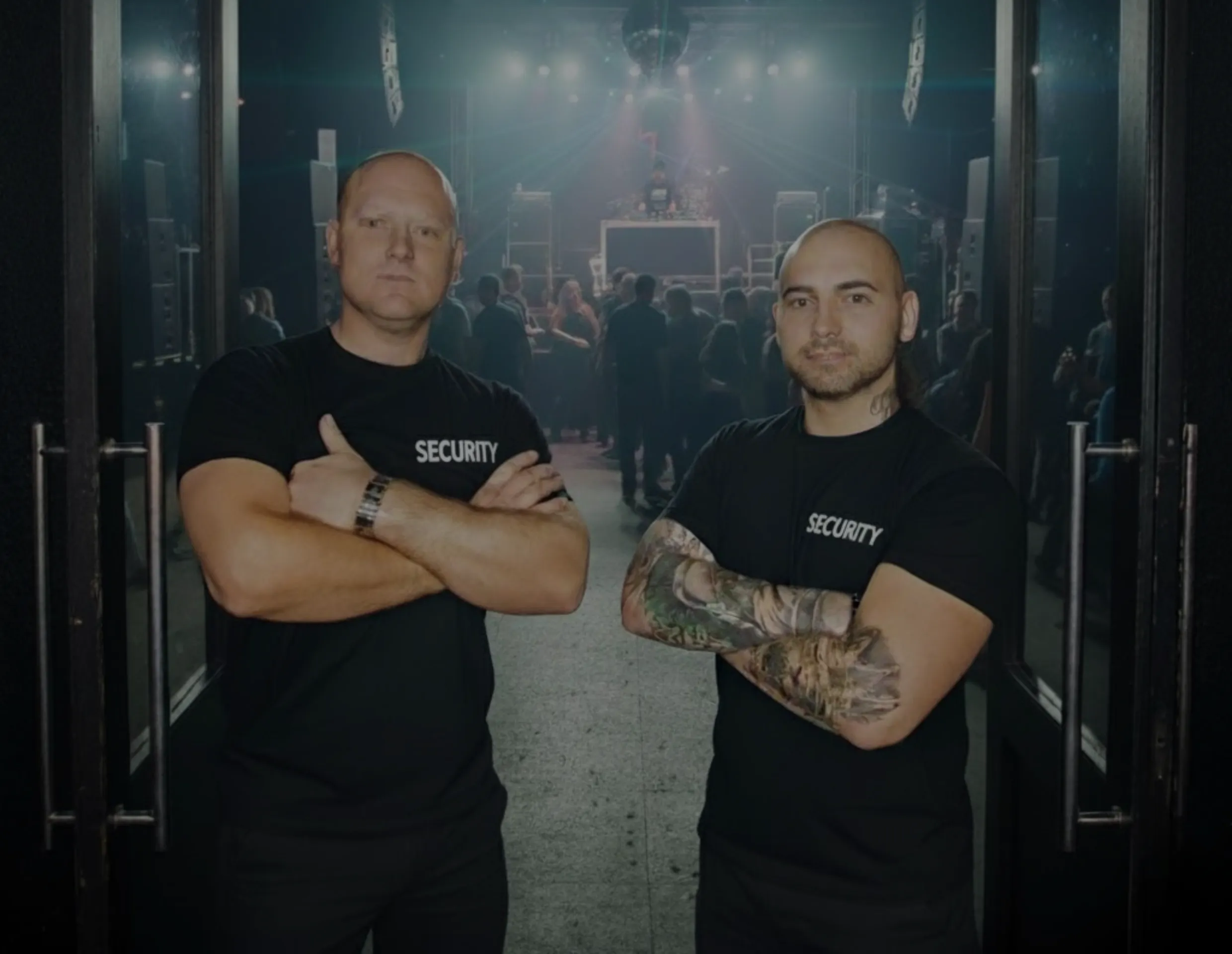
A night club is an operation where the atmosphere, the density of people and the degree of risk change rapidly. Therefore, a well-adjusted team is not only based on physical superiority, but mainly on observation, communication and timely de-escalation of the situation.
Club security as part of operation
Club security is not a separate service that appears only when a conflict starts. It is part of the whole evening: entrance operations, capacity checks, guest movement, cooperation with the bar, responses to medical issues and visitor departure. When it works well, most of its work remains unobtrusive.
The basis is an agreement with the operator. The team must know visitor rules, rules of entry, responsible persons on shift, method of communication with the bar and the boundaries of when the situation is handed over to the police or paramedics. Without it, even an experienced worker gets into the space of improvisation.
The entrance sets the tone for the evening
The entrance is the first place where the guest gets to know how the business works. Long queues, unclear rules or overbearing communication create tension before you even get inside. On the contrary, a calm and understandable procedure helps to keep the atmosphere under control.
The worker at the entrance is mainly supposed to deal with visible risk signals, capacity, refusal of entry according to company rules and passing information inside. If the guest is refused, he should receive a brief and factual explanation. Arguing for a long time usually does not improve the situation.
What to watch inside the club
Inside, risk doesn't often appear all at once. It arises gradually: repeated pushing at the bar, a tense group at the tables, a guest who loses his orientation or a person who annoys others. The team must be able to catch such changes in time and pass them on.
Important are the places where people gather or where visibility decreases: entrances, dressing room, bar, passages, toilets and the area near the floor. In places with the pressure of people and limited visibility, the importance of regular inspection, calm communication and quick transfer of the problem to the responsible person is increasing.
| Area | Typical problem | Operational response |
|---|---|---|
| Entrance | Queue, denied entry, unclear rules. | Brief communication, support from a colleague, clear transfer of information internally. |
| Bar | Pressure on staff, disputes between guests. | Timely presence, coordination with the staff, calm separation of the conflict. |
| Passages | Overcrowding and unwanted physical contact. | Release of movement, routing of people, removal of obstacles through the operator. |
| Departure | Ending conflict in front of the company. | Bring the situation to a calm close, avoid prolonging the dispute and involve the police if needed. |
Alcohol, fatigue and health problems
The security officer is not supposed to diagnose what substance a person has taken. It should recognize that the guest's condition is changing and that it may be a health risk, a threat to the environment or a situation that can no longer be resolved by normal agreement.
Practically this means monitoring orientation, stability, communication, breathing, ability to leave with an escort and response to simple instructions. If the condition is serious or unclear, call for medical help and ensure that the person is not lost in the crowd or exposed to further risk.
Harassment and vulnerable guests
The club must be able to react even to situations that are not visible as a fight. This includes harassment, coercion, disorientation, separation from a group or the need for discreet assistance. The staff should know to whom to pass such information and how to proceed without unnecessary disclosure of details.
It is important not to underestimate the guest announcement. The security guard does not have to prove on the spot what exactly happened, but they should be able to create a safer space, involve the responsible person of the company and, depending on the situation, call the police or medical help.
Communication before physical intervention
Most conflicts need a quick de-escalation, not a long debate. The worker should speak briefly, calmly and without humiliation. It is useful to explain the rule, give the person a clear possibility to cooperate and stick to one line. If each team member says something different, the conflict is easily prolonged.
Physical intervention is a last resort and must be appropriate to the situation. In addition, in the club, it takes place in front of guests, cameras and staff, so unprofessional behavior will quickly damage not only security, but also trust in the business.
Legal boundaries and visiting rules
Private security in the Czech Republic does not have the status of the police. It is based on the visiting regulations, the operator's instructions, the guest's consent for certain actions and general legal rules. Therefore, the rules of the company must be comprehensible and available before entry.
Checking at the entrance, refusing entry or removing the guest must be based on the rules and the specific situation. If the matter goes beyond a normal operational conflict, it is correct to hand it over to the police, paramedics or the responsible person of the operator.
Records, debriefing and post-shift work
The quality of club security is not only known during the evening. What happens after the incident is also important: a brief recording, passing on information to the operator, checking the camera material according to company rules and evaluating whether the situation could have been caught earlier.
A short debriefing after a shift helps to find recurring problems. It could be a congested entrance, poor lighting in a certain area, missing connection to the bar or an unclear rule for refusing entry. It is these operational details that often decide whether conflicts will recur.
Conclusion
Club safety is not about muscle, it's about working with operations, people and risk. A good team helps to maintain the atmosphere, protects guests and staff, knows its legal boundaries and knows when to deal with the operator, the police or medical professionals.